The Election as Pope in the Prison Camp
The Election as Pope in the Prison Camp is one of the most revealing episodes in Jean-Baptiste Clamence's confession, a darkly comic and deeply serious event that crystallizes his later philosophy of universal guilt, the necessity of a master, and the birth of authority from suffering. Occurring during his internment in a camp near Tripoli during World War II, this mock-pontifical election, proposed by a fanatical young Frenchman, transforms Clamence from a passive observer into a reluctant leader who, by drinking the water of a dying comrade, closes a circle and discovers the terrible logic that underpins empires and churches. The event serves as a direct, lived prefiguration of his self-appointed role as a judge-penitent in Amsterdam.
Background and the Camp
The camp near Tripoli was a place of extreme deprivation, where prisoners suffered from thirst, destitution, and the brutal elements: the vertical sun, flies, sand, and a chronic lack of water. Clamence had arrived there after a circuitous wartime journey. Having dodged active service in Europe, he was mobilized but never saw action. He was tempted by the French Resistance but found its underground, cellar-based heroism incompatible with his temperament, which preferred exposed heights. He crossed to North Africa with the vague intention of reaching London, but the situation there was unclear, and he stood aloof. Eventually, he followed a friend to Tunisia, where he was arrested by the Germans as a security measure and interned. In this camp, he encountered a young Frenchman of the "Du Guesclin type," a man of faith who had crossed from France into Spain to fight, only to be interned by the Catholic general Franco. The experience had left him with a profound melancholy, and the African sun had further unhinged him.
The Election
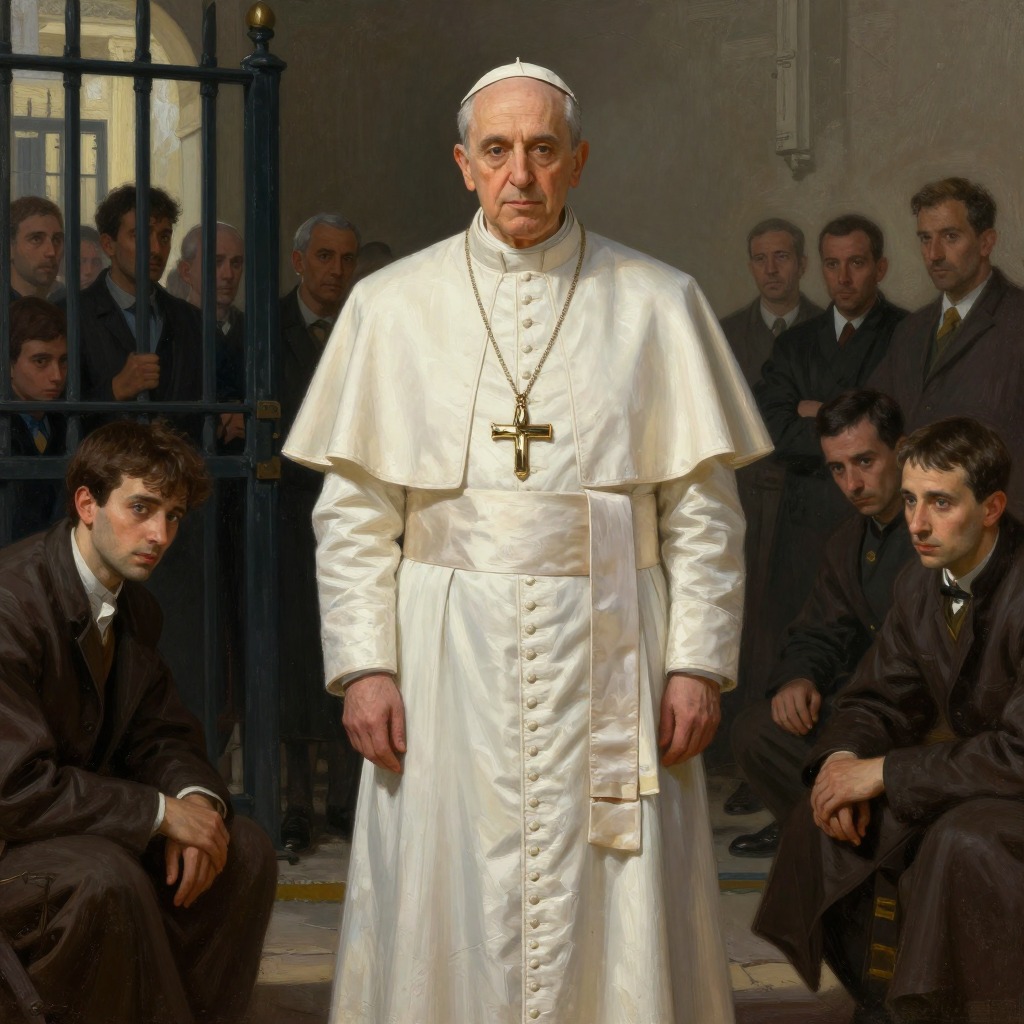
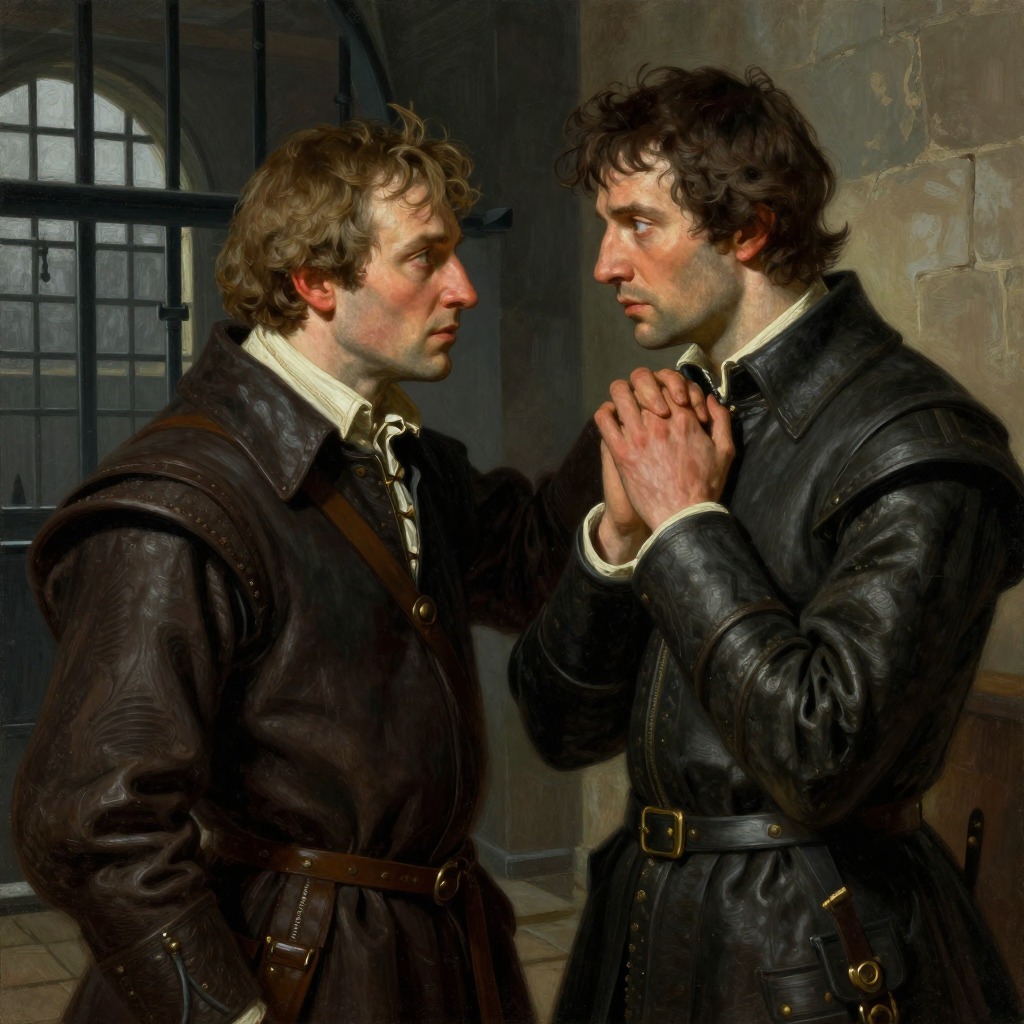
One day, under a tent that seemed to drip molten lead, the ten or so prisoners were panting among the flies. Du Guesclin, bare to the waist, covered in sweat, and with a wild stare, declared the need for a new pope who would live among the wretched instead of praying on a throne. He proposed that they choose a pope from among themselves, a complete man with his vices and virtues, to whom they would swear allegiance on the sole condition that he keep alive the community of their sufferings. "Who among us," he asked, "has the most failings?" As a joke, Clamence raised his hand and was the only one to do so. Du Guesclin declared that nominating oneself presupposed the greatest virtue and proposed electing him. The others agreed, in fun but with a trace of seriousness. Clamence, impressed by Du Guesclin and considering the prophet right, exercised his pontificate for several weeks with increasing seriousness.
The Pontificate and the Water
Clamence's role as pope was akin to a group leader or secretary of a cell. The others, even those without faith, got into the habit of obeying him. The big problem in the camp was the water allotment. Other groups had formed, and each prisoner favored his comrades. Clamence was consequently led to favor his own, a first concession. He could not maintain complete equality, giving advantages to some based on their condition or work. The distinctions were far-reaching. The circle closed the day he drank the water of a dying comrade. Du Guesclin was already dead, having stinted himself too much. Clamence convinced himself that the others needed him more than this dying man and that he had a duty to keep himself alive for them. He drank the water, and in that act, he saw the birth of empires and churches under the sun of death.
Consequences and Significance
The election and Clamence's subsequent actions are a direct precursor to his later philosophy. He learned that it was not easy to be a pope, and that the administration of suffering and the making of life-and-death distinctions are the foundations of authority. The act of drinking the water, justified by a duty to the living, is a stark example of the self-serving logic that he later systematizes. This event, more than any other, reveals the origin of his belief that every man testifies to the crime of all others and that the essential thing is to be able to permit oneself everything. The camp, with its forced collectivity and its brutal choices, becomes the laboratory for the "democracy of guilt" he later preaches. It is also the source of his insight that one must forgive the pope, for he needs it more than anyone else, and that this is the only way to set oneself above him. The election is not merely a bizarre anecdote; it is the foundational myth of Clamence's own pontificate as a judge-penitent, the moment he first tasted the power that comes from shared guilt and the administration of a terrible, human justice.